
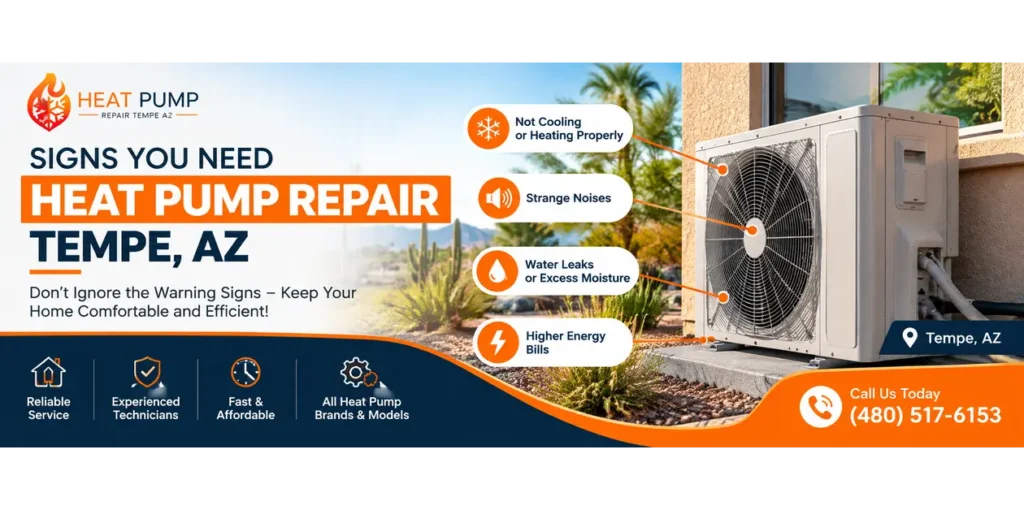
Is your heat pump acting strange lately? Maybe it is blowing warm air when it should be cooling, or it keeps turning on and off for no clear reason. These are common questions homeowners and business owners in Tempe ask every week. This guide breaks down the exact signs you need heat pump repair, so you can catch problems early and avoid a full breakdown.
At Heat Pump Repair Tempe AZ, we work on residential and commercial systems across the Tempe area every day. We have seen almost every type of heat pump problem, and we know how confusing it can feel when your system stops working the way it should. This article walks you through the warning signs, what causes them, and what to do next.
Tempe puts real pressure on HVAC equipment. Summers bring months of triple-digit heat, and your heat pump has to run almost nonstop to keep your home or business comfortable. Winters are milder, but the system still needs to switch modes and work correctly. This constant use wears down parts faster than in cooler climates, which is exactly why catching the early signs you need heat pump repair matters so much here.
Common Heat Pump Problems Homeowners and Businesses Face
Heat pump issues usually fall into a few categories. Some are mechanical, caused by worn or broken parts. Others are electrical, tied to wiring, capacitors, or thermostats. And some are related to refrigerant levels, which affect both heating and cooling performance. Compressors, coils, and refrigerant lines all take on extra strain from Tempe’s heat, and this is exactly what leads to common heat pump problems over time.
The good news is that most heat pump repair signs show up clearly before a full breakdown happens. Learning to recognize these signs early can save you money and prevent a total loss of heating or cooling during extreme weather.
Signs Your Heat Pump Needs Repair
Watch for these common warning signs. If you notice any of them, it is a good idea to schedule a professional inspection soon.
- No heating or cooling from the vents, even though the system is running
- Strange noises like grinding, squealing, rattling, or hissing sounds
- Sudden spikes in your electric bill without any change in usage habits
- The system turning on and off repeatedly without completing a full cycle
- Ice or frost building up on the outdoor unit outside of normal cold-weather cycles
- Weak airflow coming from the vents throughout your home or building
- Water pooling near the indoor unit or dripping from the system
- Musty or burning smells coming from the vents when the system runs
These warning signs rarely appear out of nowhere. Most of the time, they build up slowly, which is why regular attention to your system pays off.
Heat Pump Not Heating Properly
One of the most common complaints we hear is heat pumps not heating the way it should. This usually points to one of a few possible causes. A refrigerant leak can reduce the system’s ability to transfer heat effectively. A faulty reversing valve can stop the unit from properly switching from cooling mode to heating mode. Electrical issues, like a failing capacitor or damaged wiring, can also stop the heating cycle from working correctly.
If your home feels cold even with the thermostat set correctly, do not wait too long to have it checked. Small heating problems tend to get worse, especially once temperatures drop further at night.
Heat Pump Not Cooling During Arizona Summers
A heat pump not cooling properly is one of the most urgent problems you can face in Tempe. When outdoor temperatures reach 110 degrees or higher, a system that is not cooling correctly can turn your home into an uncomfortable, even unsafe space within hours.
Common causes include low refrigerant levels, a dirty or blocked outdoor unit, a failing compressor, or a clogged air filter restricting airflow. Sometimes the fix is simple, like clearing debris away from the outdoor unit. Other times, it points to a bigger mechanical issue that needs a trained eye to diagnose correctly.
Because summer cooling failures are urgent in our climate, this is one of the top reasons homeowners and business owners call for same-day service.
Heat Pump Making Strange Noises
If your system is a heat pump making strange noises, do not ignore it. Sounds are one of the clearest warning signs a heat pump gives before a bigger failure happens.
Grinding or screeching sounds often point to worn motor bearings. Rattling can mean loose parts inside the unit, sometimes just a loose panel, but sometimes something more serious. Hissing sounds may indicate a refrigerant leak, which affects both performance and safety. Buzzing noises are often linked to electrical issues, such as a failing relay or loose wiring connection.
Every noise tells a different story about what is happening inside your system. A trained heat pump technician can usually identify the cause quickly just by listening to the sound and inspecting the unit.
Heat Pump Short Cycling
Heat pump short cycling means your system turns on, runs for a short time, and shuts off again before completing a full heating or cooling cycle. This is hard on your equipment and usually points to an underlying problem.
Common causes include a dirty air filter restricting airflow, low refrigerant levels, a malfunctioning thermostat, or an oversized system that was never sized correctly for your home. Short cycling not only reduces comfort, it also increases wear on the compressor, which is one of the most expensive parts to replace.
If you notice your system cycling more frequently than usual, this is a strong sign your heat pump needs repair before the problem gets worse.
Heat Pump Constantly Running and High Energy Bills
A heat pump constantly running without ever reaching your set temperature usually means the system is struggling to keep up. This often overlaps with heat pump high energy bills, since a struggling system uses more electricity to do the same job it used to handle easily.
A few common causes include low refrigerant charge, a failing compressor, dirty coils that reduce heat transfer, or a thermostat that is not communicating correctly with the system. In some cases, ductwork leaks force the system to run longer to compensate for lost conditioned air.
If your energy bills have climbed steadily over the past few months without a clear reason, it is worth having your system checked. Catching this early often means a smaller repair bill compared to waiting until the system fails completely.
Heat Pump Leaking Water: What It Means
A heat pump leaking water is a sign that should never be ignored, even if it seems minor at first. Indoor units produce condensation as part of normal operation, but this water should drain away through a dedicated line, not pool on your floor or drip from the unit.
Common causes include a clogged condensate drain line, a cracked drain pan, or in colder months, ice buildup that melts and overflows. Left unaddressed, water leaks can damage flooring, drywall, and even lead to mold growth in your home or business.
If you notice water around your indoor unit, turn off the system and contact a professional promptly to prevent further damage.
When to Call for Heat Pump Repair
Knowing when to call for heat pump repair can save you from a full system breakdown at the worst possible time. As a general rule, any of the warning signs covered in this guide are worth a professional inspection, especially if more than one shows up at the same time.
Some situations call for immediate attention. If your system stops producing heat or cool air entirely, if you smell burning, or if you hear loud banging noises, turn off the unit and call for service right away. Waiting in these cases can turn a simple repair into a much larger, more expensive one.
For less urgent signs, like a slight rise in your energy bill or an occasional odd noise, scheduling a routine inspection within a week or two is usually enough time to catch the issue before it grows.
How a Professional Heat Pump Technician Diagnoses the Problem
A qualified heat pump technician follows a clear process to find the real cause of a problem, rather than guessing. This usually starts with checking your thermostat settings and electrical connections, since these simple issues are sometimes mistaken for bigger mechanical problems.
Next, the technician inspects refrigerant levels, since both low and overcharged refrigerants can cause performance issues. They also check the compressor, condenser coils, and blower motor for wear, damage, or buildup that could be reducing efficiency.
This is also a good time to understand How Does a Heat Pump Work, since knowing the basics helps you follow along with what your technician finds and why certain repairs matter for long-term performance.
Throughout the inspection, a skilled technician explains what they find in plain language, so you understand exactly what is wrong and what your repair options look like before any work begins.
Why Choose Professional Heat Pump Repair Services
DIY troubleshooting has its place for very basic checks, like replacing an air filter or confirming your thermostat has fresh batteries. But most heat pump problems involve refrigerant, electrical components, or mechanical parts that require training and proper tools to handle safely.
Professional heat pump repair services bring a few clear advantages. Technicians carry the diagnostic equipment needed to pinpoint issues quickly, rather than replacing parts through trial and error. They also understand the specific stress Arizona’s climate puts on HVAC systems, which helps them make repair recommendations suited to our conditions, not just generic advice.
At Heat Pump Repair Tempe AZ, our team focuses on honest diagnostics and clear repair options. We explain the problem, walk you through your choices, and only recommend the work that is actually needed for your system. Spotting the signs you need heat pump repair early, and calling a professional right away, is the most reliable way to avoid a costly breakdown.
Heat Pump Maintenance vs Repair: What’s the Difference
Many homeowners wonder whether they need a repair or if regular maintenance would have prevented the problem in the first place. Both play a role in keeping your system reliable, but they serve different purposes.
Heat pump maintenance is preventive. It includes tasks like cleaning coils, checking refrigerant levels, and inspecting electrical connections before problems develop. Consistent Heat Pump Maintenance Tempe AZ visits catch small issues early, often before you notice any warning signs at all.
Repair, on the other hand, addresses a problem that has already appeared. If your system is showing any of the signs covered in this guide, you are past the point where maintenance alone will fix it, and a repair visit is the right next step.
In some cases, a technician may recommend Heat Pump Replacement Tempe AZ instead of continued repairs, particularly for older systems that keep breaking down. This is usually the more cost-effective choice once repair costs start adding up on an aging unit. If you are weighing a full upgrade, our guide on The Benefits of Heat Pump Installation in Tempe AZ walks through what a new system offers, along with typical Heat Pump Installation Cost factors and what to expect if replacement makes more sense than repeated repairs. For homes without existing ductwork changes needed, Heat Pump Installation Tempe AZ projects are often completed within a single day.
If you have noticed any signs your heat pump needs repair, do not wait for a full breakdown. Heat Pump Repair Tempe AZ offers prompt, honest diagnostics for homeowners, business owners, and property managers across the city. Our team understands how Arizona’s climate affects heat pump performance, and we are ready to help whether you need a same-day repair or advice on your next steps. Recognizing the signs you need heat pump repair early is the best way to protect your comfort and your budget.
Call our team today to schedule an inspection and get your system back to reliable performance. Below are answers to a few common questions we hear from Tempe homeowners and business owners.
Frequently Asked Questions
How do I know if my heat pump needs repair or replacement?
If your system is under 10 years old and the repair cost is reasonable, repair is usually the better choice. Older systems with frequent breakdowns often make more sense to replace.
Why is my heat pump blowing cold air during heating mode?
This usually points to a stuck reversing valve or a refrigerant issue. A technician can confirm the exact cause during an inspection.
Is it normal for my heat pump to make some noise?
A quiet hum during operation is normal. Grinding, squealing, or banging sounds are not, and they usually mean a part needs attention.
How much does heat pump repair typically cost?
Costs vary based on the specific issue, but simple repairs like capacitor replacement are far less expensive than compressor repairs or refrigerant leak fixes.
Can I prevent most heat pump repairs with regular maintenance?
Yes. Routine maintenance catches many issues early, before they turn into costly repairs or unexpected breakdowns.
What should I do if my heat pump stops working completely?
Turn off the system at the thermostat, check your circuit breaker, and call a professional if the problem continues. Avoid running a system that has stopped responding normally, since this can cause further damage.
